
Links
I recommend looking through the powerpoint for an overview of this research. I included a few slides below for a quick skim.
If you feel super ambitious, you can find a full 125 page write up here but I am not quite sure I want to read that again even and I wrote it.
Side note – other portfolio pieces
By the way, most of my latest materials are password protected (and not showing on the site) so feel free to contact me at lmrogers@gmail.com to request them.
Study Background
This was research done as part of a thesis project. All work done on it is my own with the consultation of an advisor. While there were a lot of restrictions around budgeting and man power, it isn’t a terribly realistic scenario as far as time and stakeholder limitations. But that is also why I am able to have this on my public site without a password.
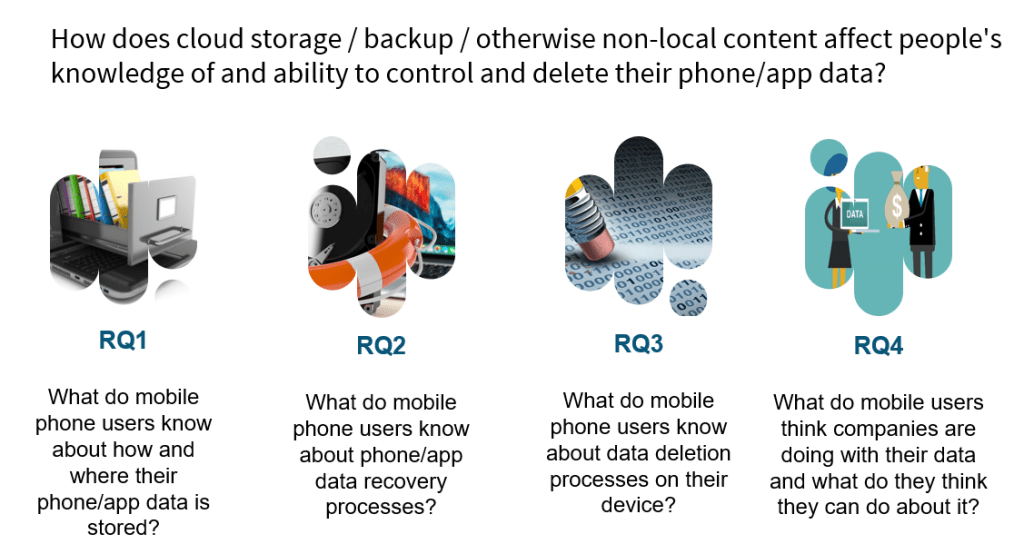
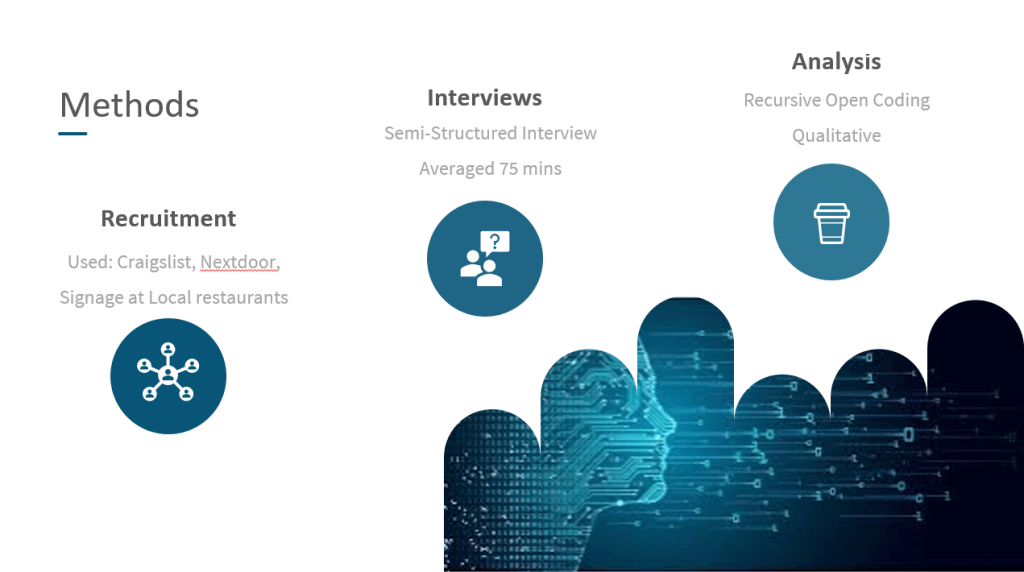
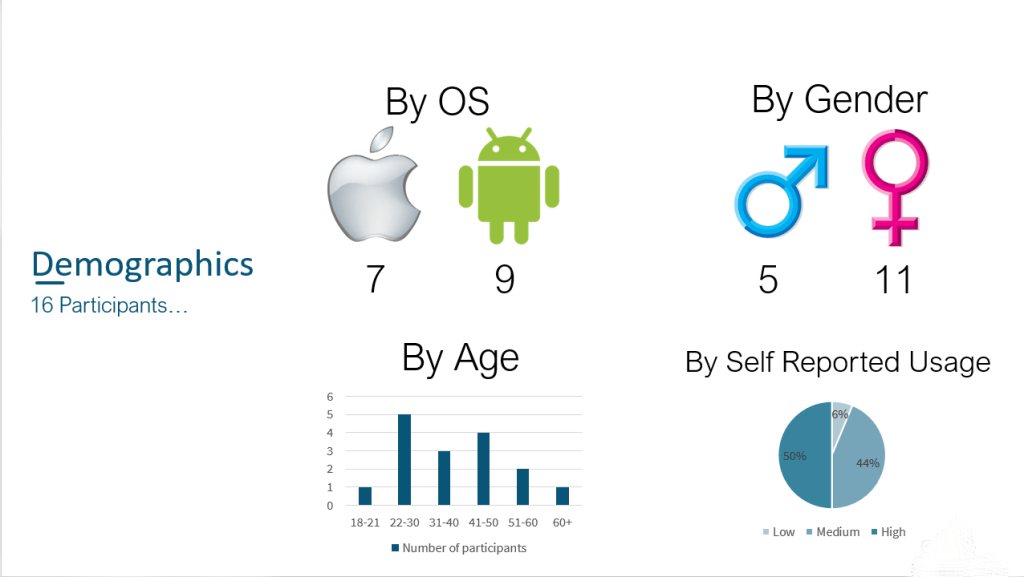
Main Findings
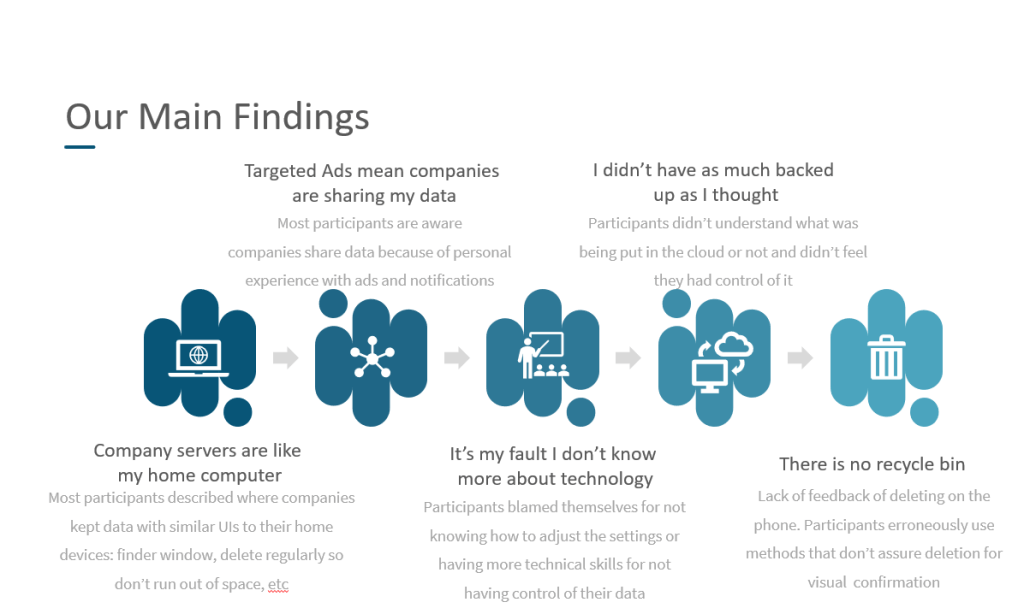
My disclaimer on that slide is it didn’t end up making the cut for the actual defense, since they didn’t map explicitly to the RQs. There is much more on each of those points in the powerpoint.
For the purposes of this blog post though, having a one slide summary is really helpful. I tend to prefer having a summary slide near the beginning of a deck in industry to make it easier for stakeholders to skim, as well as researchers looking for related work to see if the study is worth their time to read through.
Biggest Takeaways
Through writing that extremely lengthy paper, my advisor and I discovered that not much work has been done on the data recovery space for consumers. Something that occurred to me during this study is that there is a lot of room for telecom providers to provide additional backup and recovery services, as users tended to think they were the ones who could help them recover their data. They had a persistent belief that the phone company had a substantial amount of their data, despite the fact that most of what phone companies keep on file is metadata.
Additionally the cloud had a lot of negative sentiment around it that I wasn’t expecting as someone who enjoys technology. Participants had a lot of frustration because they didn’t know what they had backed up in the cloud, how to configure what went there or not, and a lot of confusion on how to fully delete something. Android users had an even more difficult time on average from our sample than iOS users, but it isn’t clear whether it is caused by the differences in UI or another correlation.
Lastly there is a tendency to make folk models out of the interactions between complex systems the phones interact with, since technology has progressed faster than the layman understanding of it. Many of the participants thought the popups on their phone that they are near a location (such as the Google review prompts) to be due to data sharing between map and ride-share companies with restaurants, rather than due to geofence or beacon technologies. I saw mention of this during my research at Home Depot as well, many participants saw algorithm ads and suggestions that were too good as “the device is listening to what I am saying”. In the current state of the world these folk models can work against companies who have “too smart” of technologies without providing some context to people of how they work. Such as “based on your location” or “people who searched for similar items”.
Lessons Learned
Part of the reason this got delayed, other than me starting work in industry, was because this was one of my first projects I moderated (way back in 2016) and as I started analysis I realized there were a lot of areas I wish I had pushed more on, and data I wish I had collected (such as income). While I recently polished up the qualitative analysis, I realized how far I have come as a moderator in the last 4 years.
 Lisa Marie Rogers